

Chinese Supplier Payment Terms Explained: 30% Deposit & Supplier Verification Guide
Sourcing medical patches from China? Discover why Chinese manufacturers require 30% down payment and 70% balance before shipment. Learn essential supplier verification steps to avoid scams and ensure safe procurement.
If you are sourcing medical dressings, adhesive patches, or wound care products from China, you have likely encountered the standard payment terms: 30% deposit (T/T) and 70% balance paid before shipment.
From an international buyer’s perspective, this places most of the risk on the purchaser. However, from the medical device manufacturer‘s standpoint, this policy is rooted in three critical factors: cash flow security, custom raw material risks, and long-standing industry practices.
Here is an in-depth look at why these payment terms dominate the Chinese manufacturing sector, particularly for custom medical supplies, followed by a comprehensive guide on how to verify if your supplier is trustworthy.
Part 1: Why 30% Deposit & 70% Before Shipment?
1. The Hard Reality of Cash Flow & Material Procurement
- High Cost of Raw Materials: Producing medical grade patches involves specialized materials like non-woven fabric, medical pressure-sensitive adhesive, release liners, and PE/PU film. Suppliers of these materials typically demand cash or very short payment cycles.
- Working Capital Pressure: Most small to medium-sized Chinese factories operate on thin profit margins. Cash flow is their lifeline. Without a deposit, the factory would need to use its own funds to purchase materials. If a buyer cancels or delays payment, the factory faces a severe cash crunch.
- The 30% deposit usually covers the exact cost of the raw materials needed for your order. This ensures the factory does not have to inject additional capital. This deposit also helps cover operational overheads like factory rent and labor costs during production.
2. The Risk of “Sunk Costs” in Customization
Medical patches are rarely standard products. They are typically customized based on your specific requirements:
- Custom Size & Shape: Die-cut to your specifications.
- Adhesion Level: Tailored for sensitive skin or heavy-duty sports use.
- Packaging & Printing: Often includes your brand logo, instructions, and custom blister packaging.
- Non-Resalable: If a factory produces 1 million units with your logo and you default, that stock becomes worthless. It cannot be sold to another client.
- Deposit = Buyer Commitment: The 30% deposit acts as “earnest money.” It proves you are a serious buyer and protects the factory if you cancel the order mid-production.
- Balance Before Shipment = Seller Protection: Medical patches are small, high-value items, and shipping is straightforward. The factory insists on full payment before release to avoid a scenario where the goods are shipped and the documents are handed over, but the final payment never arrives. Once the container leaves the port, the factory loses all leverage.
3. Compliance & Shelf-Life Pressure in Medical Manufacturing
- Expiry Date Management: Medical patches often require EO sterilization (Ethylene Oxide) and have strict expiration dates. Finished goods cannot sit in the warehouse indefinitely waiting for payment, as this eats into their usable shelf life.
- Batch Traceability: As medical devices, production requires strict batch records and quality control documentation. The factory needs to financially “close” the order to finalize their costing and compliance reports.
4. Comparison with International Payment Habits
Why don’t Chinese factories offer terms like Net 30 or Net 60, common in the West?
- High Trust Cost: In mature markets, robust credit rating systems and legal recourse make credit terms safer. However, for a small Chinese factory, suing a defaulting international buyer is prohibitively expensive and complicated.
- Low-Profit Margin: Chinese manufacturing operates on economies of scale with razor-thin profits. A single bad debt can wipe out the profits from several orders. “Safe money” is prioritized over “more money.”
Part 2: How to Verify a Supplier & Mitigate Risk
If the 30/70 payment term is non-negotiable, how can you be sure the supplier will deliver? Here is a 4-stage supplier due diligence checklist for the medical supplies industry.
Stage 1: Document Verification (The Baseline)
- Business License:
- Check the Establishment Date: Prioritize factories established more than 5 years ago. The medical sector has high entry barriers (requiring production licenses). A long history suggests stability.
- Industry-Specific Certifications:
- ISO 13485: This is the mandatory certification for medical device manufacturing. No ISO 13485 means they are not legally compliant to produce medical patches.
- CE (EU) / FDA (USA): If exporting to these regions, request the certificates. Cross-check the product name и model number to ensure your specific patch type is covered.
- Medical Device Production License: A mandatory domestic license.
Stage 2: Deep Factory Verification (The Reality Check)
- Video Factory Audit:
- Ask for a live video call to tour the facility.
- Watch for:
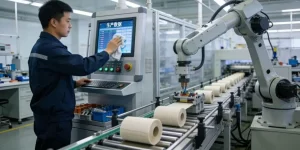
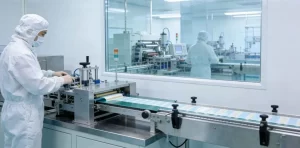
- Operating Machines: Are the machines running? Do they have dust on them? Dust indicates they haven’t run in a while.
- Raw Material Warehouse: Are there stocks of non-woven fabric, glue, and release liner? Materials with third-party labels indicate they assemble components, which is normal. An empty warehouse is a red flag.
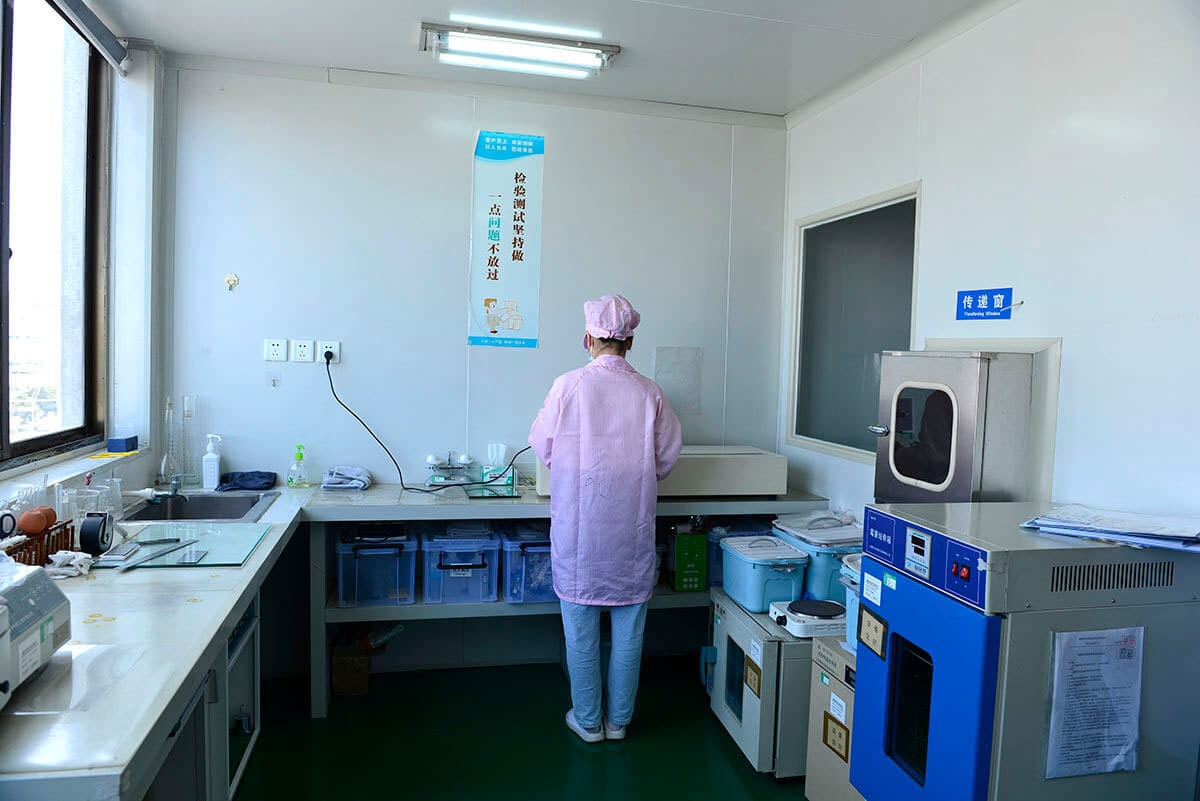
- QC Lab: Do they have testing equipment for peel strength and initial tack?
Stage 3: Third-Party Endorsements & Reputation
- Website & Social Media:
- Check the age of their website. Do they regularly update their social media with company news, exhibitions, and production updates? Consistent content creators are usually serious businesses.
- Google Reverse Search:
- Google the company name with keywords like “scam,” “complaint,” or “review.”
- Request Export Documents:
- Ask for a redacted Bill of Lading и Packing List from a shipment made in the last 3 months. If they can provide real shipping evidence, it proves their export process is mature.
Stage 4: The “Small Order” & Communication Test
- Place a Trial Order:
- Never place a full container order as a first transaction. Start with a small trial order или paid sample order via courier. Test their communication, production time, and document accuracy.
- Assess Communication:
- Professionalism: Can they answer technical questions (e.g., GSM, adhesion force) quickly and accurately?
- Problem Solving: Ask a hypothetical: “What if you find a defective roll during production?” A reliable factory will explain their process (e.g., rework, replace, or downgrade). An unreliable one will just say “No problem.”
- Check the Production Plan:
- A legitimate factory, after receiving the deposit, will provide a detailed production schedule including:
- Tooling / Die-cutting time
- Raw material arrival date
- Production start & end dates
- Packaging & QC timeline
- Before requesting the final balance, they should provide pre-shipment photos and videos of your finished, labeled goods.
- A legitimate factory, after receiving the deposit, will provide a detailed production schedule including:
Negotiation Tips for Better Terms
If your order value is high, you can try to negotiate:
- Provide Credit Proof: If you are a strong company, share your website, LinkedIn profile, or a Dun & Bradstreet report to prove your credibility. Some factories may then agree to 30% deposit, 70% against Copy of B/L.
- Use Credit Insurance: Mention that you have trade credit insurance or that you are verified by Sinosure (China Export & Credit Insurance Corporation). This reduces the factory’s perceived risk.
- Split Shipments: For large orders, propose splitting them into multiple batches. Pay for and ship the first batch before starting production on the second.
- Increase the Deposit: Offer to pay 50% deposit in exchange for the remaining 50% against the copy of B/L.
Summary
The 30/70 payment term is fundamentally a risk control mechanism within the Chinese manufacturing ecosystem. While it seems strict, it underpins the efficiency and low cost of the global supply chain.
A reliable supplier usually displays these traits:
✅ Valid Certifications (ISO 13485)
✅ Busy, Active Factory Floor
✅ Transparent Communication & Detailed Schedules
✅ Willingness to Accept a Trial Order
If a supplier checks these boxes, the risk associated with the standard payment terms is generally manageable.
Keywords used: Chinese supplier payment terms, 30 deposit 70 before shipment, medical device manufacturer, verify Chinese factory, supplier due diligence, medical patches supplier, sourcing from China guide, avoid scams China, ISO 13485 certification, OEM medical patches, T/T payment terms, factory audit checklist, China sourcing agent, medical dressing production, raw material procurement, business license China, cross-border payment risk, B2B medical supplies, long-tail sourcing keywords.